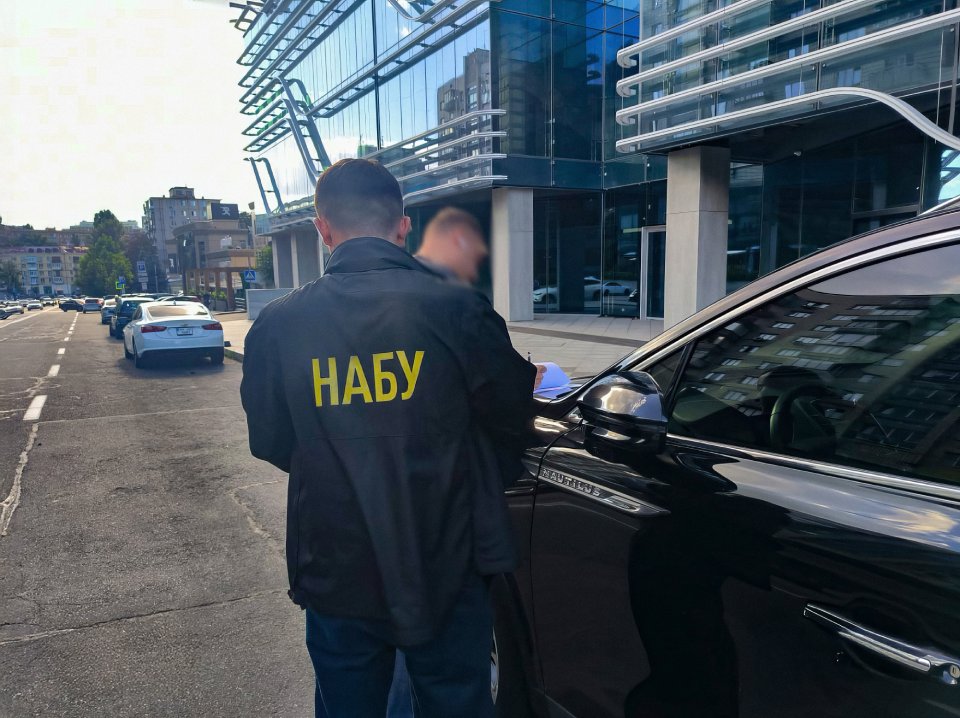
NABU and SAPO continued their fight against internal enemy - corruption
In 2023, detectives and prosecutors maintained their high work pace: in the last six months alone, they exposed and served suspicion notices on 137 persons. Indictments against 147 persons were sent to court. As a result, nearly a thousand persons are now facing trial.
This year was marked by notable exposures. At the beginning of the year, NABU caught the deputy minister for communities, territories and infrastructure development red-handed receiving a bribe of USD 400,000. He had accepted the money for facilitating contracts for the purchase of equipment. Following the appointment of the new Director of NABU on March 6, 2023, NABU detectives, under the procedural guidance of SAPO prosecutors, uncovered a criminal organization within the State Property Fund of Ukraine. Between 2019 and 2021, its members misappropriated over UAH 500 million from the State Enterprise "Odesa Port Plant" and the State Enterprise "United Mining and Chemical Company."
In May 2023, NABU and SAPO exposed a bribery scheme involving the leadership of the Supreme Court.
Overall, in the first half of 2023, NABU and SAPO notified 11 high-ranking state officials of suspicion, exposed corrupt actions by 26 heads of state-owned enterprises, and held 7 judges accountable.
These achievements were accomplished by less than 300 NABU detectives and SAPO prosecutors, some of whom also joined the Armed Forces of Ukraine and territorial defense. Therefore, there is a pressing need to expand the staff and strengthen the institutional capacity of NABU, including the establishment of its own forensic institution and the implementation of the right to wiretapping.
PRE-TRIAL INVESTIGATION (as of 30.06.2023)
394
suspects
472
indictments
946
accused
in 2023
286
new investigations
137
suspects
58
indictments
147
accused persons
Exposed in the first half of 2023:
11
senior state officials
2
"A" category civil servants
26
heads of state-owned enterprises
7
judges
2
prosecutors
8
deputies
65
others
Faced trial in the first half of 2023:
10
senior state officials
4
"A" category civil servants
2
high-ranking servicemen
12
heads of public enterprises
5
judges
3
deputies of regional councils
81
others
Convicted of corruption* in the first half of 2023:
1
senior state official
1
high-ranking serviceman
2
heads of public enterprises
2
judges
1
prosecutor
*sentences took effect
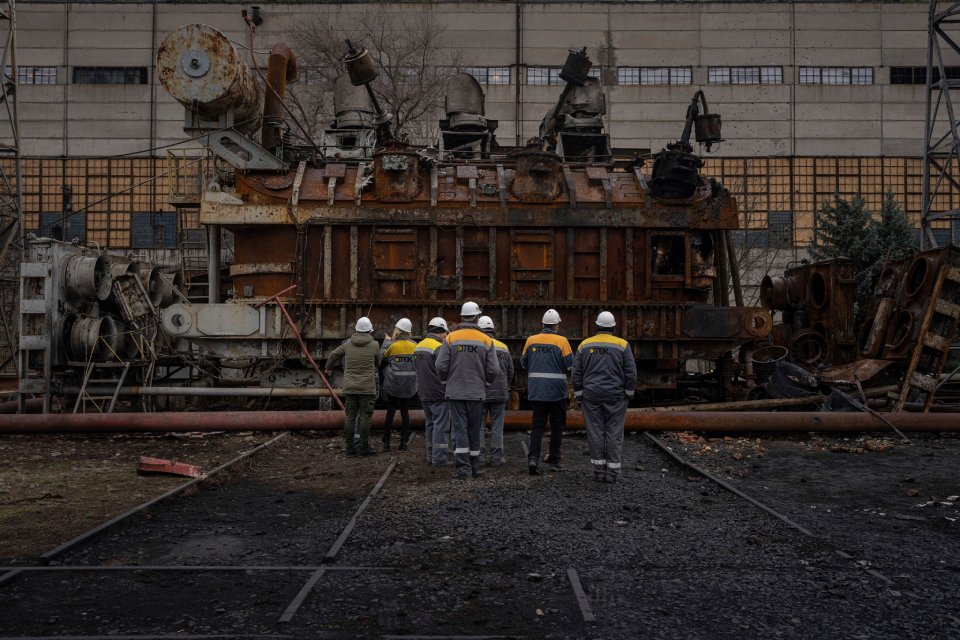
Corruption in the Energy Sector
Operation "Midas" is one of the most high-profile investigations in recent years. Its uniqueness lies in the sheer scale and audacity of the suspects, who, despite lacking official authority, effectively controlled Energoatom—a strategic state enterprise with annual revenue exceeding UAH 200 billion.
The members of the scheme influenced everything from personnel decisions and procurement to financial flows. They sent a clear message to the company's suppliers: without a 10–15% kickback, payments under their contracts would be blocked. This practice became known as the "tollgate."
All of this was made possible through the criminal organization’s connections within the Ministry of Energy and Energoatom. The operation was led by a well-known businessman, who involved a former advisor to the minister and Energoatom’s executive director for physical protection and security.
To launder the illicit proceeds, the perpetrators set up a back office in central Kyiv, a so-called "laundry." Symbolically, the premises belonged to the family of a former Member of Parliament, now a russian senator, Andriy Derkach, who is charged by the SBU with high treason.
According to the investigation, approximately $100 million passed through this "laundry." The site was used not only for maintaining "shadow" accounting records but also for funneling cash through a network of foreign shell companies.
Operation "Midas" lasted over 15 months, beginning in the summer of 2024. During this period, an enormous volume of information was gathered, including thousands of hours of audio recordings. The final phase involved nearly all NABU detectives, who conducted over 70 searches in Kyiv and various regions, seizing a significant amount of documentation and cash.
Another exposure highlights the prevalence of the "tollgate" practice. A deputy director general of an Energoatom branch also demanded kickbacks in exchange for timely payments for services rendered. The bribe amount remained the same—10–15% of the contract value.
Between June and November 2025 alone, the official received approximately UAH 1.67 million. The total amount she intended to pocket exceeded UAH 6.6 million.
In November, NABU and SAPO notified her of suspicion. The investigation is ongoing.
Corruption in the Defense Sector
Investigating corruption in the defense sector remains a strategic priority for NABU and SAPO. At a time when every hryvnia must serve the front lines, the embezzlement of budget funds earmarked for weaponry or equipment is not merely an economic crime; it is an undermining of national security.
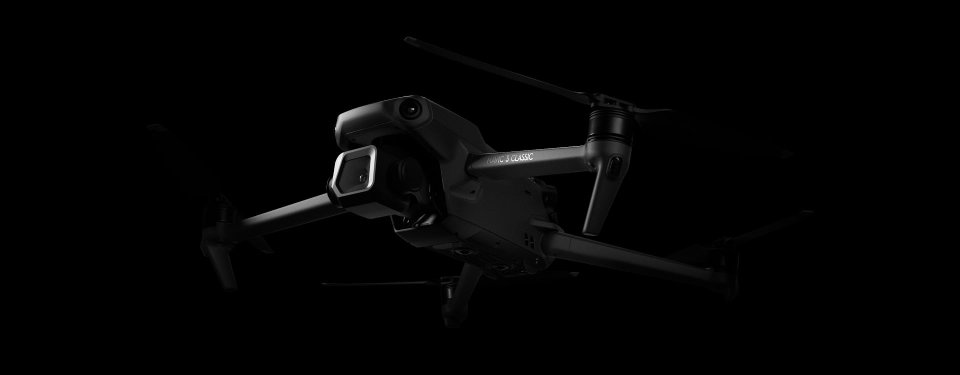
In the second half of 2025, detectives and prosecutors uncovered a fraudulent scheme involving the procurement of drones for the Defense Forces. In 2023, the State Service of Special Communications and Information Protection received UAH 30 billion from the state budget for this purpose. However, officials saw this not as an opportunity to strengthen the military, but as a resource for self-enrichment.
According to the investigation, the head of one of the service's departments developed a scheme in which drones were purchased at prices 70–90% above market rates. The perpetrators planned every detail meticulously. To ensure "preferred" companies won the tenders, they involved controlled firms to create an illusion of competition. To justify the astronomical prices, they conducted manipulative marketing research.
As a result, the state lost over UAH 90 million on the procurement of 400 DJI Mavic 3 and 1,300 Autel Evo Max 4T drones. These funds were funneled to the accounts of controlled companies, including those abroad. However, anti-corruption authorities acted preemptively, seizing over $4 million in foreign accounts and UAH 17 million within Ukraine.
Another scheme uncovered by NABU and SAPO during the reporting period concerns the procurement of UAVs and electronic warfare (EW) equipment in 2024–2025. This time, the target was community funds that local self-government bodies had transferred for military needs.
An organized criminal group, led by a former head of the Luhansk Regional State Administration and a Member of Parliament, effectively imposed a "tax" on the purchase of EW systems. For signing contracts at clearly inflated prices, its members received bribes amounting to up to 30% of the contract value.
Using a similar method, FPV drones were purchased for nearly UAH 10 million. The manufacturer inflated the product cost by $80,000, and members of the criminal group received their kickback for approving the procurement.
A separate episode of this case, involving a UAV manufacturer, concerns the trade of draft deferments (military "reservations") through fictitious employment. The company’s executives are essentially suspected of obstructing the lawful activities of the Armed Forces of Ukraine.
Equally significant is the case involving the embezzlement of UAH 102 million intended for reactive armor for the Armed Forces' armored vehicles. This occurred in April 2022, while the enemy was attempting to break through the front lines. Nevertheless, the then-director general of a state-owned enterprise decided to seize the moment. Together with accomplices, he entered into an agreement where components were purchased through fictitious shell companies at nearly triple the market price. Consequently, budget losses exceeded UAH 102 million.
Thanks to the efforts of NABU, SAPO, and the SBU, alongside audits by the State Audit Service and the State Financial Monitoring Service, the money laundering chain was exposed. The former officials who profited at the expense of tank crew safety will now face justice.
Corruption During Wartime
Corruption during wartime causes exceptional harm. It diverts resources that could have saved lives. This is a deliberate enrichment at the expense of others' misfortune—essentially, an act of looting.
A prime example is the embezzlement of UAH 140 million intended for heating and water supplies in frontline cities in the Donetsk region. The scheme, uncovered by NABU and SAPO in November, was organized by the head of the Housing and Utilities Department of the Donetsk Regional Administration.
His accomplices operated using a familiar method: they conducted direct procurements from pre-selected fictitious enterprises, artificially inflated the price of equipment, and delivered seven modular boiler houses—valued at over UAH 200 million—to Selydove and Ukrainsk without any documentation. As a result, only two were ever connected, and even those proved to be defective.
A similar situation unfolded in Sviatohirsk, where payments were made for work performed without permits or designs, and in gross violation of safety standards. The crudely built facilities failed to function as intended, while the perpetrators pressured heads of communal enterprises to accept them onto their balance sheets. Through this scheme, the state lost over UAH 140 million, leaving residents without water or heat.
Such schemes also exist far from the front lines—in Kyiv. While the country focuses on how to support its defenders, certain Ministry of Defense officials found ways to profit from the construction of housing for military personnel. For instance, one of the suspects promised a developer a win in a tender, valuing his "services" at $1.3 million.
The bribe was intended to be paid in installments via bank safe-deposit boxes. However, the scheme was halted in time: in August 2025, NABU and SAPO exposed the accomplices immediately after the first installment was received.
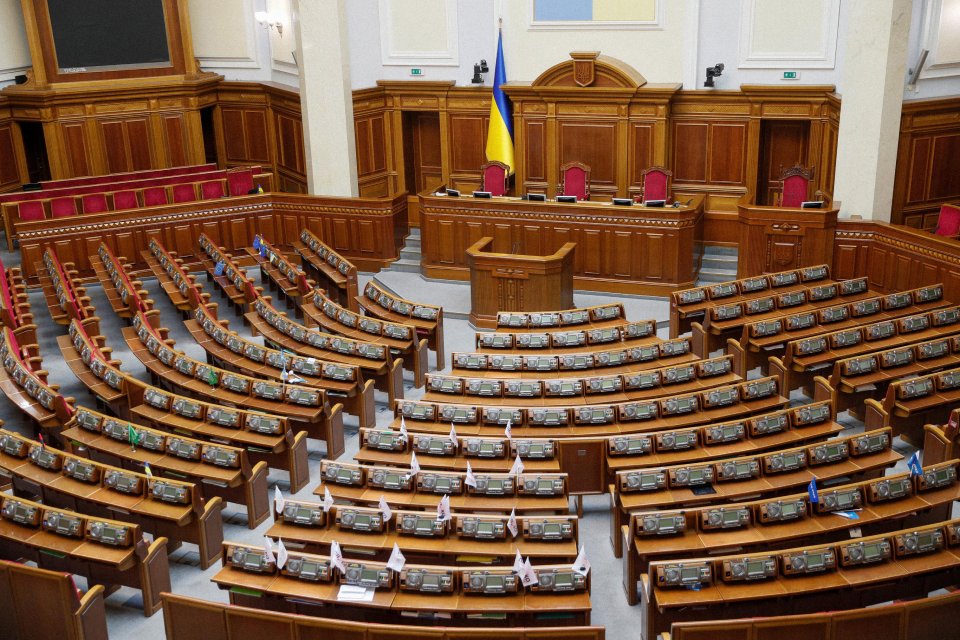
Corruption in the Verkhovna Rada
NABU and SAPO uncovered a series of corruption schemes involving sitting Members of Parliament. The investigations involve bribery for votes, manipulation of NSDC sanctions, and money laundering.
The most high-profile case involved a scheme to bribe MPs to secure "required" votes. The criminal group had a hierarchical structure and a clear division of roles, with the operations coordinated by one of the parliamentarians.
Before voting, instructions containing specific bill numbers were sent via a dedicated WhatsApp group.
Following the votes, specific MPs systematically received cash rewards. These amounts increased over time: while the rate was $2,000 in the fall of 2022, by August 2025, the minimum reward had risen to $5,000.
In December, NABU and SAPO notified five lawmakers of suspicion in this case.
Another case involves the exposure of a criminal group led by a female Member of Parliament. Its members offered a businessman to arrange for the National Security and Defense Council (NSDC) of Ukraine to impose sanctions on a competitor’s company in exchange for $250,000.
The perpetrators claimed they could funnel these funds to government officials, including NSDC members, to secure the sanctions.
As a safeguard to guarantee the full bribe, they instructed the company representative to sign a promissory note disguised as a personal loan.
After receiving an initial $125,000, the "client" was told the money would be passed to NSDC officials. However, the funds were never transferred to any officials, as the perpetrators failed to find anyone willing to carry out the illegal act.
Another lawmaker misappropriated funds from a private company by promising to assist its representatives in obtaining a permit for the cross-border transport of mineral fertilizers. After the funds were transferred to the account of a close associate, the suspect took no action in the company's interest.
To launder the illicit proceeds, the MP devised a scheme: over UAH 9 million was first transferred to a relative's law firm under the guise of "legal services." A portion of these funds was then used to purchase two luxury vehicles: a BMW X5 M and a Mercedes-Benz G 63 AMG.
The MP began openly driving these vehicles, pretending they were purchased with legitimate business income.
A suspicion from NABU and SAPO followed shortly thereafter. The investigation is ongoing.
Corruption in the Prosecutor General's Office
In October, NABU and SAPO exposed a large-scale corruption scheme organized by a prosecutor from the Office of the Prosecutor General in conspiracy with two lawyers.
The perpetrators incited a suspect in one of the National Bureau's proceedings to provide a $3.5 million bribe, which was allegedly intended to bribe SAPO officials and HACC judges to close the case.
According to the investigation, the criminal group operated between February and September 2025. During this time, its members developed a detailed plan for the phased transfer of funds, casting themselves in the role of intermediaries.
Notably, as the scheme progressed, the bribe amount increased from an initial $2 million to $3.5 million. By the time NABU detectives exposed the scheme, the perpetrators had already received a first installment of $200,000 from the suspect.
All were notified of suspicion under Part 2 of Art. 15, Part 4 of Art. 27, and Part 4 of Art. 369 of the Criminal Code of Ukraine.
The investigation is ongoing.
Corruption in the Land Sector
Land resources often fall hostage to private interests, serving as a tool for backroom deals and the legalization of shadow capital.
A prime example of this is the seizure of 18 hectares of land near Kyiv, where the "Stolychnyi" market is located, valued at UAH 160 million. The case began with a conflict between a prominent Kyiv developer and a former Member of Parliament from the infamous "Party of Regions."
To gain control over the market, the developer recruited loyal officials from the regional State Land Cadastre, who manipulated the cadastral data. This allowed a massive plot of land to be leased to a controlled company.
Subsequently, the head of the leasing firm renounced part of the plots in favor of nine strawmen. These individuals then resold the land through sham agreements to companies linked to the same developer.
Ultimately, the parties reached an understanding: the developer and the former MP signed a memorandum on the joint use and development of the land, and the latter's proxy officially joined the ranks of the owners.
In September 2025, NABU detectives exposed the scheme. At the request of SAPO, the land plots were seized, preventing them from being removed from state ownership. The organizers and their accomplices were notified of suspicion.
Another case of land corruption occurred in the Volyn region. The head of a deputy faction in the Volyn Regional Council, a former MP, and the head of the same faction in the Lutsk City Council requested $30,000 from the user of a land plot in Lutsk (also a former MP).
In return, they promised to facilitate the passage of "required" decisions by the Volyn Regional and Lutsk City Councils to permit the construction of an apartment building on the plot.
The former MP agreed, and following the approval of the detailed territory plan, provided the deputies with a portion of the bribe—$15,000. Subsequently, the Volyn Regional Council changed the land use designation, thereby allowing its development. All three individuals received suspicions from NABU and SAPO. The investigation is ongoing.
Corruption in the Tax Sector
While businesses and citizens conscientiously pay taxes to support the army, certain high-ranking officials have turned public service into a tool for enriching criminal groups.
The scale of the problem is evidenced by the exposure of high-ranking tax officials who facilitated a money-laundering hub with billion-hryvnia turnovers. Its members operated a network of 200 controlled firms that mass-produced fictitious tax invoices. This allowed legitimate enterprises to illicitly reduce their tax liabilities.
Between 2020 and 2023, the hub forged documents for the sale of goods and services totaling UAH 15 billion, with the "scheme-based" VAT exceeding UAH 2.3 billion. The operation was shielded by the former head of the State Tax Service and the deputy head of the Poltava Regional Tax Office. They helped the hub's companies obtain favorable rulings and guaranteed that no tax audits or control measures would be conducted.
According to confirmed data alone, these manipulations resulted in a UAH 147 million tax revenue shortfall for the state budget.
The criminal organization masterfully concealed its activities: documents were stored on foreign servers, and VPNs as well as foreign mobile numbers were used for communication. However, detectives managed to decrypt the "shadow" accounting records, in which the officials kept detailed logs of their illegal profits. To date, 11 participants in the scheme have been notified of suspicion. The investigation is ongoing.
Corruption in the Port Sector
Ukraine’s maritime sector has suffered from corrupt schemes for years.
In the second half of 2025, NABU and SAPO exposed two large-scale embezzlement cases that resulted in tens of millions of hryvnias in lost budget revenue.
At the state enterprise "Chornomorshliah," a scheme was devised to defraud the state twice, totaling over UAH 70 million.
First, officials sold the main technical maintenance base in Chornomorsk for a pittance, causing UAH 59 million in damages. The 4.3-hectare facility with sea access was appraised at UAH 6.5 million, though its real value was nine times higher. Ultimately, accomplices purchased the base for UAH 13.5 million. To legalize the property, it was transferred into the authorized capital of a private firm.
The UAH 11.5 million that the state enterprise did receive from the sale was subsequently transferred to a shell company for the alleged maintenance of the vessels "Henichesk" and "Khersones." In reality, these ships were docked in India, and no maintenance was ever performed.
Simultaneously, an organized group operated at the Port of Izmail, embezzling over UAH 24 million over two years by purchasing goods at inflated prices. The total amount of damages is significantly higher and is currently being determined.
The group members had advance knowledge of tenders and drafted participation terms specifically to filter out legitimate manufacturers. Firms controlled by the scheme's organizer won the contracts and supplied goods at triple the price. The difference was funneled through sole proprietors and distributed as cash among the participants.
Detectives exposed this scheme through an operational investigation initiated after analyzing public procurements in the Prozorro system and reviewing complaints from other bidders. Several companies involved in the scheme have already been blacklisted by the Anti-Monopoly Committee of Ukraine (AMCU).
Active work in this area continues.
Illicit Enrichment and False Declarations
NABU detectives and SAPO prosecutors systematically expose high-ranking officials who hide expensive purchases from the public and possess funds of unknown origin.
During the reporting period, a former vice prime minister of Ukraine was notified of suspicion of illicit enrichment. Detectives documented the transfer of over $1.2 million and nearly €100,000 in cash to him and his proxy.
Notably, the suspect was among the visitors to the so-called "laundry" used for laundering corrupt funds, which was uncovered by NABU and SAPO during Operation "Midas."
In October, the head of a regional council and his wife, an MP, were notified of suspicion for failing to declare assets worth over UAH 8 million in their 2021–2023 declarations.
Furthermore, the couple purchased apartments and two luxury Audi SQ8 vehicles without verified sources of income, totaling nearly UAH 5 million. Based on NABU’s findings, a SAPO prosecutor filed a lawsuit to recognize these assets as unjustified and recover them for the state.
The second half of the year also saw the exposure of a Kyiv judge whose assets—a house and land in the Kyiv region—exceeded her legal income by UAH 16 million.
Real estate websites listed the properties for nearly $1 million, with a final purchase price of approximately $900,000 (roughly UAH 24 million). In her 2021–2024 declarations, the judge understated their value by more than UAH 16 million.
A high-ranking SBU officer was also exposed for illicit enrichment and declaring false information.
In December 2023, he purchased an apartment for UAH 21.6 million and registered it in a family member's name. However, according to the contract, the price was only UAH 12.8 million.
To justify the source of funds, the family member claimed the income was earned as a sole proprietor providing legal and consulting services since February 2022. Evidence shows that no such services were ever provided. Additionally, there was no confirmation of the legal origin of the remaining UAH 8.8 million used for the apartment purchase.
Over half a billion hryvnias has been allocated for the needs of the army, and almost a billion hryvnias has been reimbursed to state-owned enterprises.
The economic impact of NABU and SAPO's work since the beginning of 2023 amounts to more than UAH 1.67 billion.
Thanks to NABU and SAPO, an additional UAH 662 million has been sent for the country's defense needs since the start of 2023. In total, since russia unleashed its all-out aggression, almost UAH 2 billion has been allocated. These are assets seized or voluntarily contributed within the scope of criminal proceedings investigated by NABU and SAPO, as well as bail deposited following the rulings of the High Anti-Corruption Court.
Besides funding for the Armed Forces of Ukraine, nearly UAH 1 billion has been reimbursed to the state, including public enterprises. Over UAH 883 million was returned by private companies to PJSC "Ukrnafta" (50%+1 share owned by the state), and an additional UAH 2 million was compensated for damages to JSC "Ukrzaliznytsia" (fully owned by the state).
The materials collected during the investigation by NABU detectives helped successfully prevent the embezzlement of nearly UAH 70.5 million. Throughout 2023, several guilty verdicts were also legally enforced with property confiscation, including both monetary assets and real estate, totaling over UAH 25.5 million.
ECONOMIC EFFECT
Reimbursement in criminal proceedings (both under investigation and sent to court)
UAH 6.714 blnas of 30.06.2023
UAH 919.438 mlnin the first half of 2023
UAH 1.94 bln has been sent to the army
Economic effect of NABU and SAPO work in the first half of 2023
UAH 919.438 mlnreimbursed to the state
UAH 25.521 mlnassets confiscated to the state revenue by court
UAH 662.418 mlnbail, monetary funds, property, and other assets transferred for the country's defense needs by court